Phonics
Rapid Reading Development: Systematic phonics instruction helps young learners decode words quickly, accelerating early reading success.
Improved Letter-Sound Recognition: Students master phonemic awareness, blending, segmenting, and automatic sound recall.
Stronger Spelling & Writing Skills: With sound-symbol mastery, students spell more accurately and write with greater confidence.
Boosted Reading Fluency: Guided practice builds smooth, expressive, and efficient reading habits.
Prevention of Early Literacy Gaps: Early intervention reduces long-term struggles and promotes strong foundational language skills.
Increased Reading Confidence: As decoding becomes easier, students gain enthusiasm and motivation for reading.
Support for Struggling Readers: Specialized instruction helps learners with dyslexia tendencies, speech delays, or early reading challenges.
Rapid Reading Development: Systematic phonics instruction helps young learners decode words quickly, accelerating early reading success.
Improved Letter-Sound Recognition: Students master phonemic awareness, blending, segmenting, and automatic sound recall.
Stronger Spelling & Writing Skills: With sound-symbol mastery, students spell more accurately and write with greater confidence.
Boosted Reading Fluency: Guided practice builds smooth, expressive, and efficient reading habits.
Prevention of Early Literacy Gaps: Early intervention reduces long-term struggles and promotes strong foundational language skills.
Increased Reading Confidence: As decoding becomes easier, students gain enthusiasm and motivation for reading.
Support for Struggling Readers: Specialized instruction helps learners with dyslexia tendencies, speech delays, or early reading challenges.
Rapid Reading Development: Systematic phonics instruction helps young learners decode words quickly, accelerating early reading success.
Improved Letter-Sound Recognition: Students master phonemic awareness, blending, segmenting, and automatic sound recall.
Stronger Spelling & Writing Skills: With sound-symbol mastery, students spell more accurately and write with greater confidence.
Boosted Reading Fluency: Guided practice builds smooth, expressive, and efficient reading habits.
Prevention of Early Literacy Gaps: Early intervention reduces long-term struggles and promotes strong foundational language skills.
Increased Reading Confidence: As decoding becomes easier, students gain enthusiasm and motivation for reading.
Support for Struggling Readers: Specialized instruction helps learners with dyslexia tendencies, speech delays, or early reading challenges.
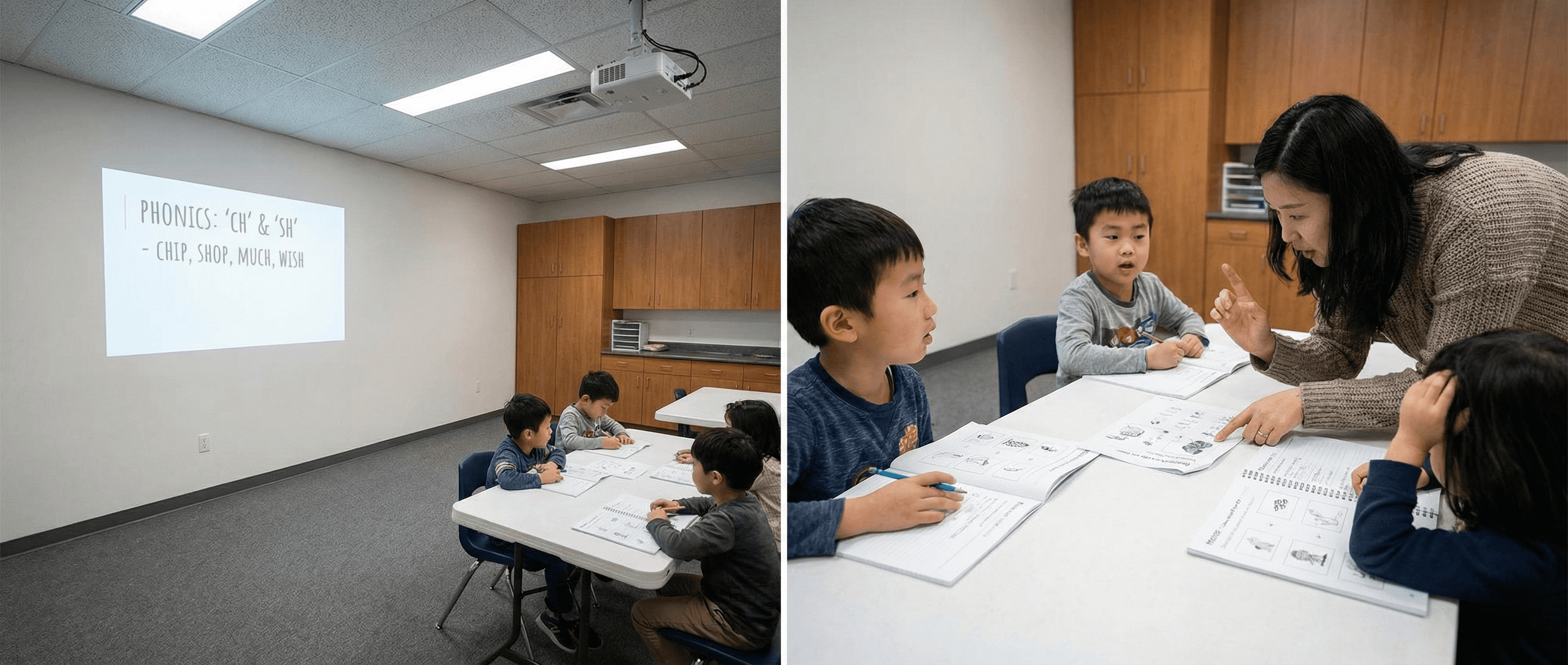
Our Phonics program provides early readers with the essential building blocks needed to decode words, read fluently, and build lifelong literacy skills. The curriculum follows a structured, evidence-based sequence that teaches letter-sound relationships, blending, segmenting, and spelling patterns. Students engage in multisensory activities that strengthen auditory processing, phonemic awareness, and sound-symbol recognition. As learners advance, they begin reading leveled texts, practicing fluency, and building confidence through repeated success. This program is ideal for young learners beginning their reading journey, as well as older students who need targeted intervention or foundational literacy support.
Our Phonics program provides early readers with the essential building blocks needed to decode words, read fluently, and build lifelong literacy skills. The curriculum follows a structured, evidence-based sequence that teaches letter-sound relationships, blending, segmenting, and spelling patterns. Students engage in multisensory activities that strengthen auditory processing, phonemic awareness, and sound-symbol recognition. As learners advance, they begin reading leveled texts, practicing fluency, and building confidence through repeated success. This program is ideal for young learners beginning their reading journey, as well as older students who need targeted intervention or foundational literacy support.
More Services
Other Services
Question in mind?
Question in mind?
Contact Us!
Question in mind?